Dye sublimation is a printing method that infuses ink directly into polyester fabric fibres using heat and pressure, converting solid dye into a gas that bonds permanently with the fabric at a molecular level. The result is a full-colour, photographic-quality print with no film layer on the fabric surface, vibrant colours that will not crack or peel, and wash durability that matches the life of the garment or item itself.
At Printopia, dye sublimation is available on polyester and poly-blend lanyards and bandanas. It produces edge-to-edge, full-colour prints that are the highest quality output available for these product types. Pricing starts from S$4 per piece for polyester lanyards at 100 units and from S$6 per piece for polyester bandanas at 100 units. Standard lead time is 8 to 12 business days from artwork approval.
What Is Dye Sublimation Printing?
Dye sublimation is a thermal printing process that uses heat to convert solid dye particles into a gas without passing through a liquid state. This gas penetrates the polyester fabric fibres and bonds with them at a molecular level. When the item cools, the dye re-solidifies within the fibres rather than on top of them, making it a permanent part of the fabric structure.
The practical result is a print that has no surface layer. Unlike silkscreen ink, heat transfer film, or embroidery thread, there is nothing physically sitting on top of the fabric. The colour is in the fabric. This means the print cannot crack, peel, or lift. It is as wash-resistant as the polyester fabric itself. And because the ink infuses into the fibre rather than coating it, the fabric retains its original hand feel with no stiffness or texture change from the printing.
Dye sublimation supports unlimited colours, full gradients, photographic images, and edge-to-edge coverage across the entire printable surface. It is the highest-quality colour reproduction method available for polyester and poly-blend merchandise, and the standard specification for premium lanyards, event bandanas, and other polyester items where colour richness and durability are the priority.
The Dye Sublimation Printing Process Step by Step
- Artwork preparation. The design is prepared as a high-resolution digital file in RGB colour mode. Dye sublimation colour output is calibrated to digital colour profiles rather than Pantone ink references. Artwork is checked for resolution (minimum 150dpi at print size for fabric items, ideally 300dpi) and any white or light background elements are confirmed as intentional, as dye sublimation cannot print white on white polyester.
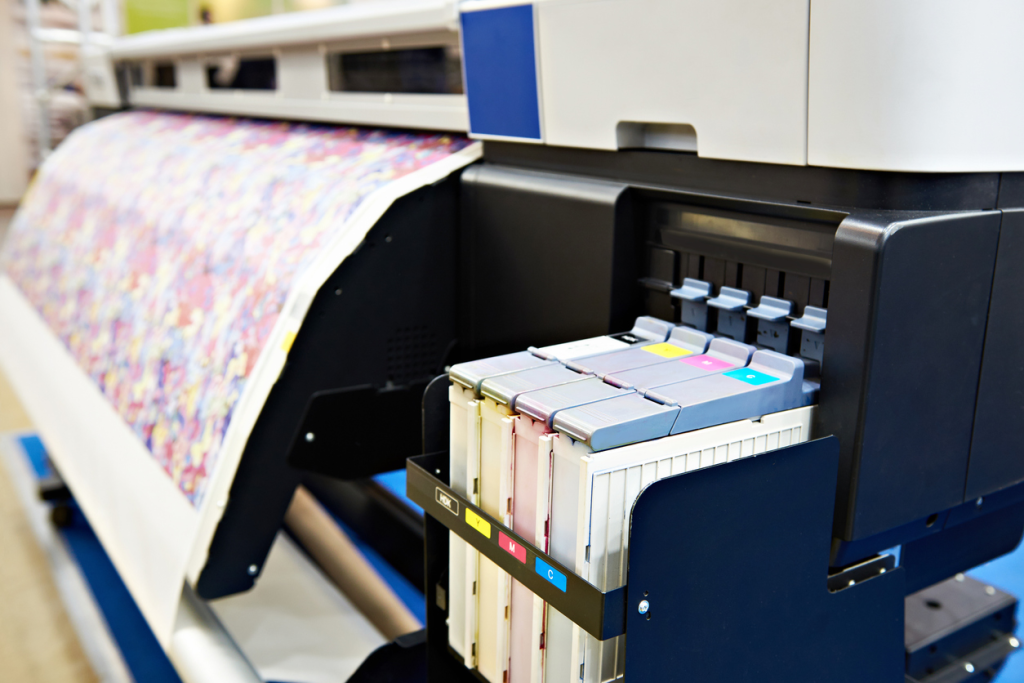
- Transfer paper printing. The design is printed in reverse (mirror image) onto a specialised sublimation transfer paper using a large-format inkjet printer loaded with sublimation dye inks. The colours on the transfer paper appear muted and inaccurate at this stage because the transformation to vibrant colour only occurs during the heat transfer step.
- Pre-pressing the substrate. The polyester item is placed on the heat press platen and briefly pre-pressed to remove moisture and any wrinkles. A flat, smooth surface is essential for even dye transfer.
- Transfer pressing. The printed transfer paper is placed face-down on the polyester item and the heat press closes at approximately 200 degrees Celsius for 30 to 60 seconds depending on the item thickness and substrate type. At this temperature the sublimation dyes convert to gas and penetrate the open polyester fibres.
- Cooling and paper removal. The press opens and the transfer paper is peeled away while the item is still warm. As the item cools to room temperature the polyester fibres close around the dye molecules, trapping them permanently within the fabric structure. The colours that appeared muted on the transfer paper are now vibrant and accurate on the polyester item.
- Quality inspection. Each item is checked for colour accuracy, coverage uniformity, any areas of incomplete dye transfer, and edge definition. Items with uneven coverage or colour inconsistency are removed from the batch.
Substrate Requirements for Dye Sublimation
Dye sublimation has one non-negotiable requirement: the substrate must be polyester or a polyester-rich blend. This is the fundamental constraint of the method and the most important thing to understand before specifying it.
Why polyester is required
Sublimation dyes are designed to bond chemically with polyester polymer chains during the heat transfer process. The dye gas penetrates the polyester fibre structure and is trapped permanently when the fibres cool. Cotton, natural fibres, and most other synthetic materials do not have the same polymer structure and will not accept the dye in the same way. On a cotton substrate, sublimation dye sits on the surface rather than infusing into the fibre, producing a washed-out, impermanent result.
For polyester-cotton blends, dye sublimation produces a speckled or heathered effect because the dye only bonds with the polyester component of each thread. Blends above 65 percent polyester are generally acceptable. Below 65 percent polyester the effect becomes increasingly uneven and unpredictable.
Colour of the base fabric
Dye sublimation cannot print white. The sublimation inks are transparent and are designed to be applied onto a white or very light-coloured polyester base. Areas of the design that require white must be achieved by leaving the white base fabric unexposed. On a light blue or cream polyester base, white areas in the design will appear light blue or cream rather than white. For designs that require true white elements, the base fabric must be white.
Printing dye sublimation on dark-coloured polyester produces poor results as the ink colours are overwhelmed by the base colour. Dark polyester substrates are generally not suitable for dye sublimation. For dark items, heat transfer with a white base layer is the more appropriate full-colour method.
| Interested in dye sublimation for your polyester lanyards or bandanas? Tell Printopia your quantity and design. Get a Quote → |
What Dye Sublimation Can Achieve That Other Methods Cannot
Edge-to-edge full coverage
Dye sublimation can print to the full edge of the fabric item with no border, margin, or untreated area. For lanyards, this means the design runs from one end to the other with full colour coverage on every millimetre. For bandanas, the design can fill the entire 50cm x 50cm surface including right to the hem edge. No other print method achieves this on fabric without visible transfer borders or screen boundaries.
Photographic colour reproduction
Sublimation inks produce a colour gamut that covers a wide range of vibrant hues, including colours that are difficult to achieve with silkscreen or heat transfer. Gradients reproduce smoothly without banding. Photographic images reproduce with fine detail and accurate skin tones. For designs that are based on brand photography, illustration, or complex pattern work, dye sublimation produces results that are qualitatively different from any other fabric print method.
No surface feel change
Because the ink is inside the polyester fibres rather than sitting on top of them, the fabric retains its original hand feel completely. A dye sublimation printed polyester lanyard feels identical to an unprinted one. There is no ink film, no coating, no added stiffness. For lanyards that will be worn daily around the neck, this is a meaningful quality difference compared to silkscreen or heat transfer alternatives.
Permanent wash durability
Properly executed dye sublimation produces a print that is as permanent as the polyester fabric itself. The dye cannot be removed by washing, dry cleaning, or exposure to sweat without physically destroying the polyester fibre. For lanyards used daily and washed regularly, dye sublimation is the most durable print method available.
When to Choose Dye Sublimation
- Full-colour or photographic lanyards: when the design is more than a simple logo on a solid background. Dye sublimation is the specification for lanyards with patterned, gradient, or photographic designs.
- Edge-to-edge bandana designs: when the bandana design is intended to cover the full surface rather than being a logo on a solid base colour. Reactive dye is an alternative for cotton bandanas. Dye sublimation is the right choice for polyester or poly-blend bandanas.
- Premium lanyards for conferences and events: when the event identity or sponsor branding requires full-colour reproduction and the lanyard is a quality signal for the event. Many Singapore conferences and exhibitions specify dye sublimation lanyards for this reason.
- Brand identity with complex visual elements: when the brand uses gradients, patterns, or multi-element designs that cannot be simplified to four solid colours without losing identity.
- Items that will be washed frequently: when durability is the priority on a polyester item, dye sublimation outperforms heat transfer on long-term wash resistance.
Dye Sublimation Printing Prices in Singapore
- Polyester lanyard, 15mm or 20mm, full-colour dye sublimation (100 pieces): S$4 to S$7 per piece
- Polyester lanyard, 15mm or 20mm, full-colour dye sublimation (300 pieces): S$3 to S$5 per piece
- Polyester or poly-blend bandana, full-colour dye sublimation (100 pieces): S$6 to S$9 per piece
- Polyester or poly-blend bandana, full-colour dye sublimation (300 pieces): S$4.50 to S$7 per piece
There is no per-colour setup cost for dye sublimation. The price per unit covers transfer paper printing, pressing, and quality inspection. Volume discounts apply at 200 and 300 pieces. Always request a tiered quote if your quantity is flexible.
Compared to silkscreen on the same polyester item: dye sublimation typically costs 20 to 40 percent more per unit at 100 pieces but produces a significantly higher quality result in terms of colour range and finish. For simple 1 to 2 colour logos, silkscreen on polyester is the better value choice.
For designs with 3 or more colours, patterns, gradients, or full-coverage designs, dye sublimation is worth the premium.
Limitations of Dye Sublimation
Understanding the limitations of dye sublimation prevents order errors and ensures the right method is selected for each application:
- Polyester substrate required.
- Cannot be used on cotton, natural fibres, or blends below approximately 65 percent polyester. For cotton items, use heat transfer or reactive dye printing.
- White or light base fabric required.
- Dye sublimation cannot be used on dark-coloured polyester items. The design colours are overwhelmed by the dark base. For dark polyester items, heat transfer with a white base layer is the appropriate full-colour alternative.
- Cannot print true white.
- White in a dye sublimation design is represented by the unprinted white base fabric. If the base is not white, there is no true white in the print.
- Colour shift between screen and fabric.
- Dye sublimation colours on the finished polyester item will appear slightly different from the on-screen preview due to the gas-phase colour transformation. Professional dye sublimation suppliers calibrate their print profiles to minimise this shift but a precise Pantone match cannot be guaranteed in the same way as with silkscreen.
- Not suitable for very dark or saturated designs on light polyester.
- Very dark areas in a dye sublimation design on white polyester may cause slight shrinkage or distortion in the fabric due to the high heat required to achieve full ink density. This is rarely a practical issue at corporate merchandise scale but should be noted for designs that are predominantly very dark.
Products Available with Dye Sublimation at Printopia
| Custom lanyards Polyester and poly-blend lanyards in 15mm and 20mm widths. Dye sublimation produces full-colour, edge-to-edge patterns and designs. View our custom lanyard printing services → |
Dye Sublimation Printing at Printopia
Printopia handles dye sublimation printing in-house for polyester lanyards and bandanas. Our sublimation printing is calibrated to produce accurate, vibrant colour output with consistent results across the full batch.
- In-house dye sublimation for polyester lanyards and bandanas
- Full-colour, edge-to-edge coverage available on all compatible items
- Digital colour profile calibration for accurate colour reproduction
- Free digital mockup before production on every order
- MOQ from 50 pieces for most dye sublimation applications
- Standard lead time of 8 to 12 business days from artwork approval
- Combined orders: dye sublimation lanyards can be ordered alongside silkscreen tote bags, embroidered aprons, or other items in a single combined delivery with consistent colour references
Not sure which method suits your design?
Share your artwork with us and we will recommend the best approach →
Frequently Asked Questions
What is dye sublimation printing?
Dye sublimation is a printing method that converts solid dye into gas using heat and pressure, infusing the dye permanently into polyester fabric fibres at a molecular level. The result is a full-colour, photographic-quality print with no surface layer on the fabric. The colour becomes part of the polyester itself and cannot crack, peel, or wash out under normal conditions. It is the highest-quality full-colour print method available for polyester merchandise.
What is the difference between dye sublimation and heat transfer printing?
Both methods use heat and pressure. The key difference is what happens to the ink.
In heat transfer printing, a pre-printed film is bonded to the fabric surface, leaving a visible layer on top of the fabric.
In dye sublimation, the ink converts to gas and infuses into the polyester fibres themselves, leaving no surface layer.
Dye sublimation produces a softer hand feel, superior wash durability, and more vibrant colours on polyester. Heat transfer works on a wider range of substrates including cotton and canvas. For polyester items, dye sublimation is almost always the better method. For cotton and canvas, heat transfer is the appropriate full-colour alternative.
Can dye sublimation be used on cotton?
No. Dye sublimation requires a polyester or polyester-rich substrate to work correctly. The sublimation dyes are designed to bond chemically with polyester polymer chains during the heat transfer process. On cotton or other natural fibres, the dye cannot infuse into the fibre structure and produces a washed-out, impermanent result. For full-colour printing on cotton items, heat transfer or reactive dye printing are the appropriate methods.
Why does dye sublimation require white fabric?
Dye sublimation inks are transparent and function by adding colour to the base fabric rather than covering it. White areas in the design are represented by the unprinted white base fabric. On a coloured base, the design colours mix with the base colour to produce shifted or inaccurate results. On a dark base, lighter design colours are entirely obscured. For accurate, vibrant colour reproduction, dye sublimation requires a white or very light-coloured polyester base.
How much does dye sublimation printing cost in Singapore?
Dye sublimation printing costs from S$4 to S$7 per piece for polyester lanyards at 100 units and from S$6 to S$9 per piece for polyester bandanas at 100 units. There is no per-colour setup cost. Volume discounts apply at 200 and 300 pieces. Dye sublimation typically costs 20 to 40 percent more per unit than silkscreen on the same polyester item but produces significantly higher colour quality and durability for complex or full-coverage designs.
Is dye sublimation printing durable?
Yes. Dye sublimation is the most wash-durable print method available for polyester items. Because the dye is infused into the polyester fibres rather than sitting on the surface, it cannot be removed by washing, sweat, or normal wear. The print will remain vibrant for the full lifespan of the polyester item under normal use and laundering at standard temperatures.
What file format do I need for dye sublimation printing?
High-resolution raster files at minimum 150dpi at print size (ideally 300dpi) are the primary format for dye sublimation. PNG files with transparent backgrounds are preferred for designs with isolated elements. TIFF files are also accepted. Vector files (AI or EPS) are ideal where available. Artwork should be provided in RGB colour mode as dye sublimation output is calibrated to digital RGB profiles rather than Pantone or CMYK references. For brand-critical colours, provide an RGB reference alongside your artwork.
What is the minimum order quantity for dye sublimation printing in Singapore?
Printopia’s minimum order quantity for dye sublimation printing is 50 pieces for lanyards and bandanas. Contact us to discuss smaller quantities if your requirement is below this threshold.
| Ready to order dye sublimation printing in Singapore? Contact Printopia with your product, quantity and design for a free quote. Get a Quote → |