
Need an urgent custom corporate gifting quote?
WhatsApp us →
Live printing for events works because it transforms merchandise from a passive giveaway into an active brand moment. Attendees watch their item being created in front of them, select from pre-approved designs, and leave with something that feels tied to the specific event rather than pulled from a generic stockroom.
At Singapore corporate events, trade shows, product launches, and D&Ds, this difference in perceived value is measurable: dwell time at live printing booths is consistently 3 to 5 times longer than at standard merchandise tables, and items collected at live printing stations are significantly more likely to be kept and used.
This guide covers why live printing works, which Singapore events it suits best, the three print methods available, what it costs, and exactly what you need to plan before booking it.
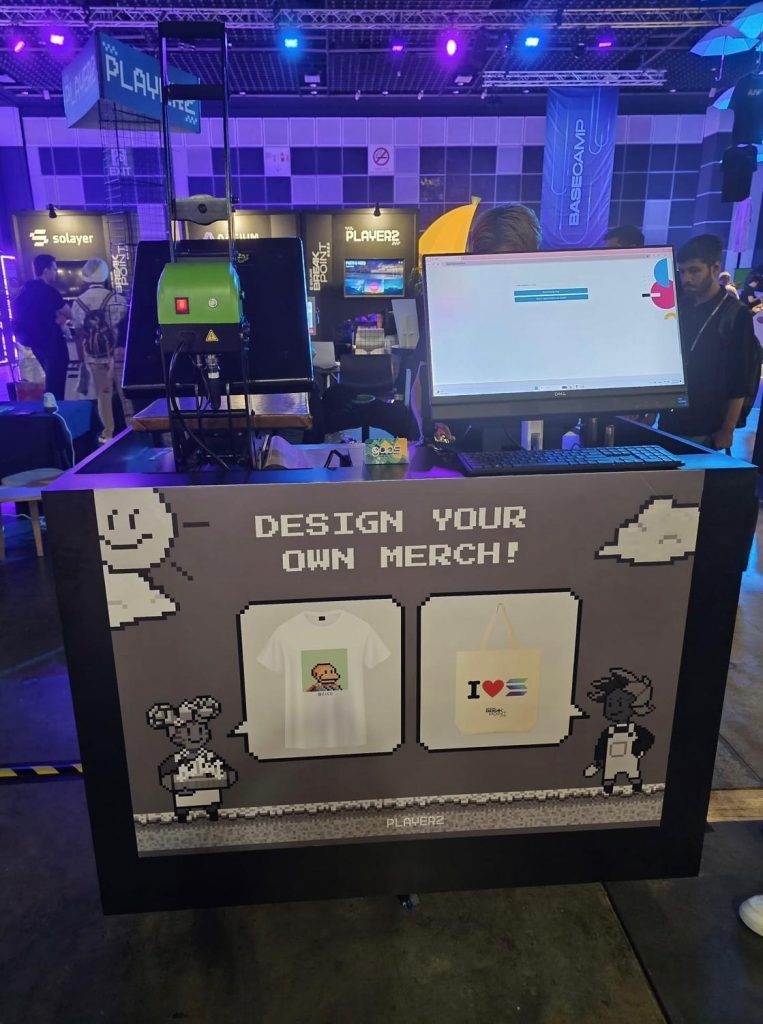
Why Live Printing for Events Creates More Engagement Than Pre-Packed Merchandise
The psychology is straightforward. People value things they watched being made more than things they received from a pile.
This is not a marketing claim — it is a documented effect in consumer psychology called the IKEA effect, extended to production experiences. When an attendee stands at a printing station, chooses a design, and watches the squeegee pull ink across their tote bag or tee, they experience a form of co-creation. The item has a story. It was made during this event, at this moment, for them.
For brands, this creates three measurable outcomes at Singapore events:
- Extended booth dwell time: a live printing queue draws a crowd and keeps attendees at your booth for 5 to 15 minutes rather than a passing 30-second interaction. Trade show exhibitors consistently report that a printing station is the single most effective crowd-drawing activation available.
- Social media content: attendees photograph and film the printing process and the finished item. The visual spectacle of silkscreen printing in particular generates organic social content that reaches networks beyond the event room.
- Brand recall: recipients who experienced the printing process remember both the event and the brand associated with it far better than those who collected a pre-packed bag. The process creates an episodic memory anchor that a static giveaway cannot.
Which Singapore Events Live Printing Suits Best
Live printing performs best when interaction is part of the event objective. Here is a practical breakdown by event type:
| Event type | Top product | Best method | Throughput/hr | Budget guide |
| Trade show / exhibition | Tote bags, tees | Silkscreen | 40 to 80 pcs | From S$800 setup |
| Product launch | Tees, tote bags | Silkscreen or DTG | 15 to 60 pcs | From S$1,000 setup |
| Company D&D | Aprons, tote bags | Silkscreen | 40 to 80 pcs | From S$800 setup |
| Road show | Tote bags, pouches | Heat transfer | 80 to 120 pcs | From S$600 setup |
| Team-building day | Aprons, bandanas | Silkscreen | 40 to 80 pcs | From S$700 setup |
| National Day event | Tees, bandanas | Silkscreen | 40 to 80 pcs | From S$800 setup |
Events where live printing does not add value: high-speed registration queues where the goal is fast throughput, very small gatherings under 30 people where the setup cost is disproportionate, and events where every attendee receives the same pre-specified item with no element of choice.
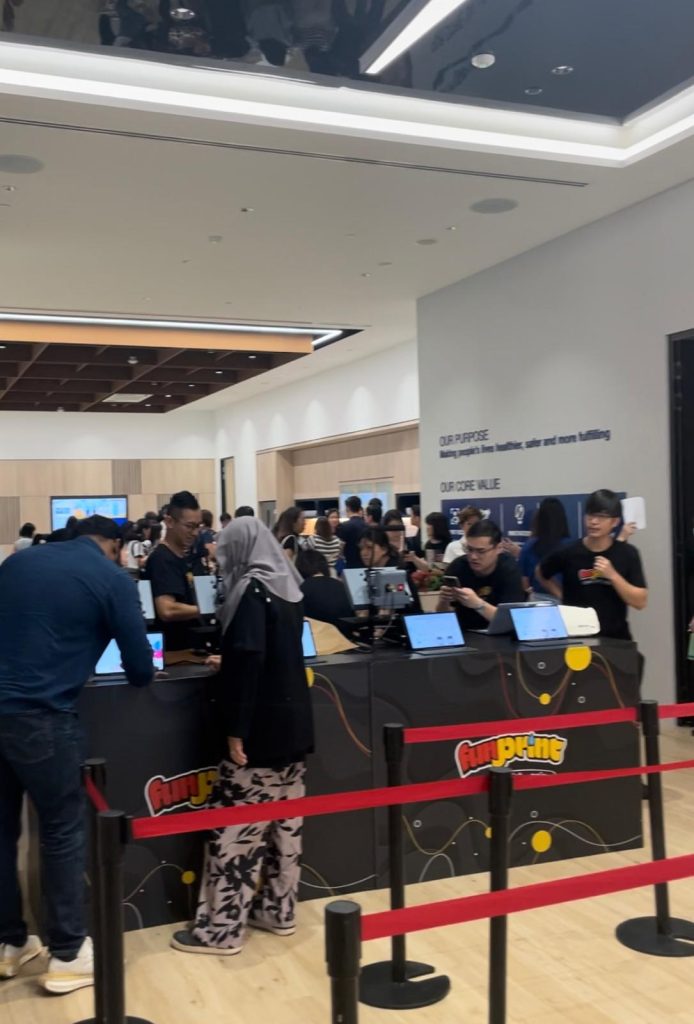
The Three Live Printing Methods and What Each Delivers
Not all live printing is the same. The method determines the visual spectacle, the throughput rate, the design complexity achievable, and the cost per piece. Here is how the three methods Printopia uses compare:
Silkscreen printing
The most visually spectacular live printing format. A portable screen printing rig is set up at the venue and ink is pulled across a mesh screen with a squeegee onto the item below. The physical action, the smell of fresh ink, and the immediate reveal of the design create a sensory experience that generates photographs and conversation. Best for large events where the printing process itself is part of the activation.
- Throughput: 40 to 80 pieces per hour depending on design and drying method
- Design complexity: 1 to 4 solid colours. No gradients or photographs.
- Items: tote bags, tees, aprons, pouches, bandanas
- Space required: minimum 3 by 3 metres, 13A power socket within 5 metres
- Best for: trade shows, product launches, D&Ds, National Day events
Heat transfer printing
A pre-printed design on transfer film is applied to the item using a portable heat press. Faster and quieter than silkscreen, and supports full-colour or complex designs. Less visually dramatic but significantly higher throughput. The right choice when speed is the priority or when the design requires more than four colours.
- Throughput: 80 to 120 pieces per hour
- Design complexity: unlimited colours, gradients, photographs
- Items: tote bags, tees, aprons, pouches
- Space required: 2 by 2 metres minimum, 13A power socket
- Best for: road shows, high-attendance events, designs with complex artwork
DTG (Direct-to-Garment) printing
A digital inkjet printer applies full-colour ink directly to the garment. The most flexible method for personalisation: names, unique designs, or variable data can be printed per piece without additional setup. The slowest of the three methods in terms of throughput, suited to premium activations with smaller crowds and longer dwell times.
- Throughput: 15 to 25 pieces per hour
- Design complexity: full colour, photographic, variable data including names
- Items: 100 percent cotton tees and garments primarily
- Space required: 2 by 2 metres minimum, 13A power socket
- Best for: VIP activations, premium product launches, events where personalisation is the headline feature
| Planning a live printing activation for your Singapore event? Tell Printopia your event date, expected attendance, and venue. Free consultation and quote. Get a Quote |
The Operational Factors That Determine Whether Live Printing Succeeds
Live printing looks effortless when done well. It is a precision logistics operation behind the scenes. The events where it fails almost always fail for operational reasons, not creative ones. Here is what separates a smooth activation from a problematic one:
Artwork locked in advance
All designs must be finalised and approved at least 7 to 10 business days before the event. For silkscreen, screens are physically prepared in advance and cannot be changed on the day without significant cost and delay. For heat transfer and DTG, artwork is loaded into the printing system pre-event. Last-minute design changes are the single most common cause of live printing problems. Treat artwork approval as a hard deadline.
The right number of design options
Offering too many design options creates decision paralysis and slows the queue. Offering only one design removes the sense of personalisation that makes live printing valuable. The optimal range is two to four pre-approved designs. For events where personalisation is the headline, a single design with a variable name element (via DTG or heat transfer) is the cleaner approach.
Throughput matched to attendance
Calculate your expected queue peak, not your total attendance. A conference with 500 delegates where 200 will want a printed item within 90 minutes of a main session break requires a different setup than a trade show with 500 visitors spread across an 8-hour day. Printopia plans throughput requirements during the consultation stage and recommends running two stations in parallel for events where peak demand exceeds 60 people per hour.
Venue requirements confirmed in advance
Before booking, confirm with your venue: floor space available (minimum 3 by 3 metres for silkscreen, 2 by 2 metres for heat transfer), access to a 13A power socket within 5 metres, permission for ink and heat-generating equipment, adequate ventilation for silkscreen ink curing, and load-in timing (Printopia requires 60 to 90 minutes for silkscreen setup, 30 to 45 minutes for heat transfer or DTG).
Buffer stock
Always order blank merchandise items 15 to 20 percent above the expected print count. Running out of blanks mid-event is worse than having leftovers. Printopia supplies blank merchandise as part of the live printing package and manages inventory levels throughout the activation.
How Much Does Live Printing Cost at Singapore Events?
Live printing pricing at Printopia combines a setup or hire fee with a per-piece cost for blank merchandise and printing. Here are realistic price ranges:
- Silkscreen live printing: setup from S$800 to S$1,500 depending on number of designs and colours, plus S$3 to S$8 per piece for blank merchandise and printing
- Heat transfer live printing: setup from S$500 to S$900, plus S$2 to S$5 per piece
- DTG live printing: setup from S$1,000 to S$2,000, plus S$5 to S$12 per piece
For a 200-person event with silkscreen printing where each attendee receives one printed tote bag, a realistic total budget is S$1,800 to S$2,800 including setup, blanks, printing, and a Printopia operator for the day. This works out at S$9 to S$14 per person, which is competitive with pre-printed event merchandise of equivalent quality when engagement value is factored in.
Live Printing vs Pre-Printed Merchandise: When to Choose Which
Live printing is not always the right choice. Here is an honest comparison:
- Choose live printing when: you want booth dwell time, the event benefits from an interactive element, your design can be simplified to 4 or fewer colours for silkscreen, you have lead time for artwork approval, and your budget covers the setup cost.
- Choose pre-printed merchandise when: you need to hand out items as quickly as possible to a large number of people, every attendee receives the identical item with no element of choice, your design is too complex for on-site printing, or your budget does not accommodate live printing setup costs.
- Consider both: many Singapore events use pre-printed items (lanyards, branded pouches in delegate bags) alongside a live printing station as an optional additional experience. This gives all attendees a baseline gift while providing the printing activation for those who engage with it.
How Printopia Handles Live Printing at Singapore Events
Printopia manages live printing activations for Singapore corporate events, trade shows, road shows, and brand activations. We handle the full process from artwork preparation through to on-site operation and post-event debrief.
- All three live printing methods: silkscreen, heat transfer, and DTG
- In-house screen preparation and artwork setup: no outsourcing, no last-minute supplier coordination
- Experienced on-site operators: trained print team represents your brand throughout the activation
- Blank merchandise supplied: tees, tote bags, aprons, pouches, and bandanas sourced and quality-checked by Printopia
- Branded station setup available: the printing station itself can be dressed with your brand’s visuals for a fully cohesive activation
- Combined orders: live printing paired with pre-printed lanyards, pouches, or aprons for a complete event merchandise programme
- Post-event debrief: print count, leftover blanks, and any waste items reported after each activation
For the full guide to live printing including setup requirements, venue logistics, and how to book, see: Live Printing at Events in Singapore
Frequently Asked Questions
Why does live printing work for events?
Live printing works because it transforms merchandise from a passive giveaway into a participatory experience. Attendees watch their item being made, feel a sense of co-creation, and receive something that feels tied to the specific event moment. This increases perceived value, extends booth dwell time, generates social media content, and produces stronger brand recall than pre-packed alternatives.
How much does live printing cost in Singapore?
Live printing at Singapore events costs from S$500 to S$2,000 for setup depending on the method, plus S$2 to S$12 per piece for blank merchandise and printing. For silkscreen, budget from S$800 setup plus S$3 to S$8 per piece. For heat transfer, from S$500 setup plus S$2 to S$5 per piece. For DTG, from S$1,000 setup plus S$5 to S$12 per piece. A 200-person silkscreen activation with tote bags typically costs S$1,800 to S$2,800 total.
What is the difference between live silkscreen and heat transfer printing?
Silkscreen uses a mesh screen and squeegee to press ink onto the item — it is visually spectacular and produces 40 to 80 pieces per hour, but is limited to 4 solid colours and requires more floor space. Heat transfer applies a pre-printed film using a heat press, supports unlimited colours, produces 80 to 120 pieces per hour, and is more compact. Silkscreen is the crowd-drawing format. Heat transfer is the throughput-efficient format.
How far in advance do I need to book live printing for my event?
Book at least 3 to 4 weeks before your event. Artwork must be finalised 7 to 10 business days before the event date to allow time for screen preparation (silkscreen) or file setup. Last-minute bookings within one week of the event may be possible but cannot be guaranteed. Contact Printopia as early as possible to check availability and confirm logistics.
What items can be printed live at a Singapore event?
The most commonly printed items at Singapore events are 100 percent cotton tee shirts, canvas tote bags, cotton aprons, and bandanas. These flat fabric surfaces work well with silkscreen and heat transfer. DTG requires cotton-rich garments specifically. Items with complex seams, padding, or non-fabric surfaces are generally not suitable for live printing.
How many items can be printed per hour at a live printing event?
Throughput depends on the method: silkscreen produces 40 to 80 pieces per hour, heat transfer produces 80 to 120 pieces per hour, and DTG produces 15 to 25 pieces per hour. For events expecting more than 60 participants per hour at the peak, Printopia recommends running two stations in parallel to prevent queue congestion.
Can attendees personalise their own design at a live printing station?
Full personalisation with custom artwork per attendee is not feasible within standard event timelines. Practical personalisation options include: offering 2 to 4 pre-approved design choices, adding a name to a fixed design template via DTG or heat transfer, or using a fixed design with variable colour elements. Discuss personalisation requirements with Printopia during the planning stage.
What venue requirements does live printing need in Singapore?
Silkscreen requires a minimum 3 by 3 metre floor space, a 13A power socket within 5 metres, adequate ventilation for ink curing, and 60 to 90 minutes for setup before the event opens. Heat transfer and DTG require a minimum 2 by 2 metre space, a 13A power socket, and 30 to 45 minutes for setup. Printopia confirms all venue requirements during the booking consultation.
| Planning a live printing activation for your Singapore event? Contact Printopia with your event date, expected attendance, and venue details. Free consultation and quote within 24 hours. Plan Your Activation! |